Justin and Daphne’s enduring partnership
Our Chemical HeartsIdentity and Origins
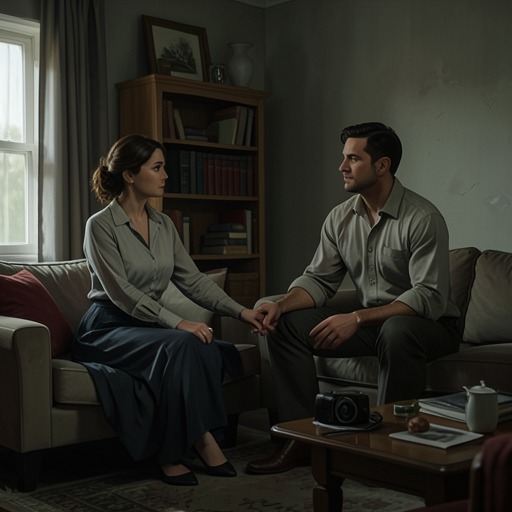
Justin and Daphne Page meet after school at a KFC when they are barely tweens. Justin, remembered as a cocky child, asks Daphne to marry him on the spot, offering her a piece of fried chicken in place of an engagement ring. The proposal is comic and unceremonious, but the relationship that follows gives the anecdote its weight: they do not marry immediately, yet, as their son recounts it, neither dates anyone else from that first encounter onward.
Eleven years pass before they marry. They elope in India on Christmas Day, just after they have finished college, dressed in swimwear and painted with henna. A Polaroid of them feeding mangoes to elephants preserves the journey in a single playful image. The contrast between the childhood proposal and the later elopement makes their union feel less like a sudden fairy-tale conclusion than a long-running attachment repeatedly renewed through shared choices.
A Shared Life and Family
Henry Page regards his parents’ affection as more than a romantic legend. Their relationship remains visibly lively in ordinary family life: even hormonally intense teenagers, he observes, seem less giddily in love than they do. Rather than finding this embarrassing, he admires it. The romance matters to him not simply because it began at first sight, but because its warmth is still apparent years later.
Their household also reflects a deliberate openness to unconventional lives. When Sadie Page was a child, Justin and Daphne were hippies, living as an artist and a carpenter in an abandoned warehouse. By the time they are raising Henry Page, they are, in his view, exceptionally cool and open-minded parents. Their history gives his confidence in telling Daphne about an uncertain evening out a family context: he expects her to respond with curiosity rather than strict conventional disapproval, and she treats his proposed adventure as a welcome sign of independence.
Justin’s carpentry remains part of the family’s domestic landscape. After he moves his workshop into the backyard, his fashion sense deteriorates in Henry Page’s affectionate account; he is often seen in a Hawaiian shirt, short shorts, and black spectacles, or in pajamas. The teasing description makes their household feel intimate rather than ceremonious. Their closeness is expressed not only through the exceptional story of their courtship, but through the familiar, humorous ease with which their son observes them.
Parenting and the Inheritance of Their Romance
Henry Page’s awe of his parents distinguishes his response from the familiar adolescent posture of dismissing them as uncool. Their demonstrative attachment does not repel him; it offers him a model of love that seems possible in real life. Their early proposal and elopement could have remained a polished family myth, but his attention to their present-day affection makes the relationship an active influence on how he understands romance.
Daphne’s response when Henry Page tells her he may be going out without knowing exactly where the evening will lead shows the practical side of their openness. She accepts the uncertainty and makes light of Sadie Page’s more rebellious adolescence, noting that Sadie had already been arrested three times by Henry’s age. Her response neither turns the outing into a crisis nor treats her son as incapable of making choices. The family’s humor and trust sit alongside the idealized love story, grounding it in a particular style of parenting.
Separation and Continuing Connection
After Christmas, Justin and Daphne announce that they will take separate vacations: he will go to Canada and she to Mexico. This time, unlike an earlier point in their history, no unwanted pregnancy brings them back together. When Justin returns, he packs his things and moves into the carpentry workshop in the backyard. The change gives their relationship a visible new boundary within the home, but the account does not describe them as wholly estranged: they continue to eat breakfast together every morning.
That combination of separation and routine complicates Henry Page’s picture of a love that once seemed almost impossibly complete. The morning meals preserve a daily point of contact even as Justin relocates his living space. The narrative offers no resolution that restores their earlier arrangement, so their partnership is shown as enduring in a qualified sense: its form changes, while familiar acts of connection remain.
Narrative Significance
Justin and Daphne’s relationship serves as Henry Page’s early reference point for love. Its origin story is strikingly romantic, but its significance lies equally in the ordinary evidence that follows—their visible affection, the household’s permissive atmosphere, and the breakfast they continue to share after choosing separate lives. The later separation prevents their romance from functioning as a simple promise that lasting love means an unchanging couple. Instead, their history holds together devotion, family intimacy, humor, and distance, giving Henry Page both an ideal to admire and a more complicated example of how a relationship can alter without every bond vanishing.